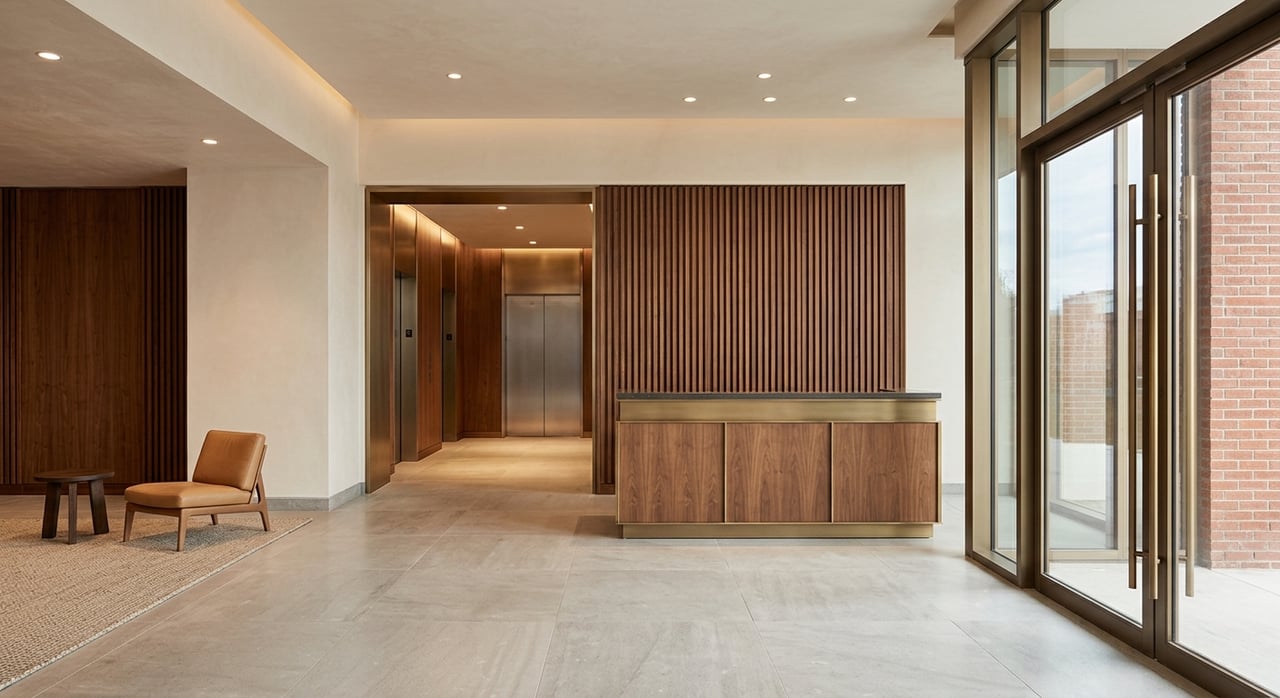
Essential Boston Luxury Condo Buying Tips for High-Rises
Buying a luxury condo in Boston can feel straightforward until you realize how different one high-rise can be from the next. A sleek tower in the Seaport, a full-service building Downtown, and a historic-address condo in Back Bay may all sit in the luxury category, but they often come with very different pricing, monthly costs, parking setups, and resale considerations. If you want to buy wisely, you need to look past the lobby and views and focus on how the building actually operates. Let’s dive in.
One of the biggest mistakes luxury condo buyers make is treating Boston as a single high-rise market. In reality, the city has several submarkets with different price points, buyer demand, and resale patterns.
Current condo snapshots show a wide spread across Boston neighborhoods. Back Bay sits at a $1.59M median listing price, Downtown at $1.9M, and Seaport at $2.62M, while the broader Fenway-Kenmore-Audubon Circle-Longwood area is much lower at $720K. Those numbers show why your search should start with location strategy, not just square footage or finishes.
Back Bay remains one of Boston’s most established luxury addresses, with landmarks and destinations like Newbury Street, Boylston Street, Commonwealth Avenue, the Prudential Center, Trinity Church, and the Boston Public Library shaping the area’s appeal. It is a protected historic district, which gives it a distinct identity compared with newer tower markets.
Current inventory shows 105 condos for sale in Back Bay, with a $1.59M median listing price, about 55 days on market, and roughly 1 offer on average. For you as a buyer, that suggests a luxury market with meaningful inventory and a well-established resale story.
Downtown Boston has been the city’s hub since the 1700s and includes City Hall, corporate offices, the Freedom Trail, Faneuil Hall, waterfront access, and a mix of historic buildings and modern glass towers. That mix gives buyers a wider range of building types than you might find in a more narrowly defined neighborhood.
Current Downtown condo inventory is 104 units, with a $1.9M median listing price, about 76 days on market, and 1 offer on average. That longer market time can mean more room to compare buildings carefully, especially when service levels and condo fees vary widely from one property to another.
The South Boston neighborhood overview and Boston’s planning efforts show why the Seaport and South Boston Waterfront have become premium residential areas. This part of the city is closely tied to waterfront living, newer construction, and major resilience planning.
Seaport inventory currently stands at 53 condos for sale with a $2.62M median listing price, around 79 days on market, and 1 offer on average. If you are targeting newer high-rise construction and a more service-driven lifestyle, this is often where your budget needs to stretch the most.
Fenway-Kenmore is anchored by Fenway Park, the Museum of Fine Arts, Symphony Hall, higher education institutions, and the Back Bay Fens. It can still offer attractive condo options, but it functions differently from Boston’s core luxury corridors.
The broader Fenway-Kenmore-Audubon Circle-Longwood condo market shows 52 condos for sale at a $720K median listing price, about 32 days on market, and 3 offers on average. For luxury buyers, that means Fenway is generally a more mixed-price market rather than a direct substitute for Back Bay, Downtown, or the Seaport.
In Boston’s high-rise market, luxury often comes down to service as much as design. Buyers tend to compare not only finishes and floor plans, but also how the building supports daily life.
For example, Millennium Tower Boston’s service package includes valet, doorman, concierge, a two-level club, a 75-foot indoor pool, an owner’s lounge, a private dining room, and club concierge support. Even if you are not buying in that building, it is a useful example of the kind of amenity package many luxury buyers use as a benchmark.
When you compare buildings, ask yourself a few practical questions:
A beautiful lobby can impress you on day one. Consistent management, thoughtful staffing, and amenities you will truly use are what shape long-term satisfaction.
In Boston, parking is not a minor detail. It can have a real impact on convenience, desirability, and resale.
The city notes that resident parking permits are neighborhood-specific, many streets are restricted to resident parking, and curb parking is priced in high-demand areas. Current meter rates are $3.75 per hour in Back Bay and South Boston Waterfront and $2.50 per hour in Fenway/Kenmore.
That helps explain why buyers often place real value on:
If parking is included, make sure you know exactly what kind it is. Assigned, deeded, leased, and valet-based arrangements can affect both your day-to-day use and future resale appeal.
Luxury buyers often focus on the monthly condo fee, but the number alone does not tell the whole story. In Massachusetts, condos are governed by Chapter 183A and their master condominium documents, and the state does not provide regulatory oversight over condominiums.
That means the building’s documents are critical. They tell you how the association operates, how expenses are divided, and what the rules are for owners.
Under Massachusetts law, common expenses must be assessed at least annually based on an adopted budget, and the master deed may allocate those expenses by unit area as well as unit location, amenities, and limited common areas. In practical terms, two units in the same tower may carry meaningfully different monthly fees.
When you buy into a high-rise, you are also buying into a shared financial and governance structure. That is why document review matters just as much as the physical unit.
Massachusetts law requires associations to maintain key records, including the recorded master deed, bylaws, financial records, reserve records, contracts for work or services, and current insurance policies. Section 10 of Chapter 183A also outlines reserve-account handling and insurance requirements for larger associations.
Your due diligence should include a close look at:
The bylaws are especially important because they address maintenance, repairs, expense collection, manager engagement, rulemaking, and restrictions on the use of units and common areas. They can also help you understand practical topics like pets, rentals, and parking structure.
One document deserves special attention in a Massachusetts condo purchase: the 6(d) statement. Under state law, it identifies unpaid common expenses and other sums assessed against the unit, and it must be furnished within 10 business days after a written request.
This is an important closing document because it helps confirm whether the seller is current on condo-related obligations. It is one of the details that can protect you from unpleasant surprises late in the process.
When you buy luxury real estate, it is easy to focus on the current experience. But smart buyers also think about how the property may perform when it is time to sell.
Boston’s submarkets each carry different resale drivers. Back Bay often trades on historic prestige and walkability, Downtown on central access and a wide product mix, Seaport on newer construction and waterfront identity, and Fenway on institutional demand and proximity to parks and cultural destinations.
Beyond location, resale strength often depends on whether the building is easy to finance, insure, and maintain. That is especially relevant in waterfront and low-lying areas. Boston’s Resilient Boston Harbor planning highlights flood pathways and long-term preparedness, and the research for this market also flags major flood risk concerns in parts of Downtown.
For many buyers, the strongest purchase is not simply the newest unit or the highest floor. It is the one that combines a recognizable address, a service package that fits the building, practical parking, clear documents, and reserves that suggest the association can manage major expenses without unexpected pressure.
If you are comparing Boston luxury high-rises, keep your focus on the issues that affect both daily ownership and long-term value.
Prioritize these factors:
A Boston luxury condo can be an exceptional purchase, but only if the building works as well on paper as it does in person.
If you are weighing options across Back Bay, Downtown, the Seaport, or another Boston neighborhood, The McLaren Team can help you compare buildings, review the details that matter, and make a confident move with a clear strategy.
Whether you are interested in selling your home or buying a new dream home, we make it our mission to be by your side every step of the way and long after the closing. Simply put, our goals are your goals. Contact The McLaren Team today to discuss all your real estate needs!
GET IN TOUCH WITH OUR TEAM TO LEARN MORE

THE MCLAREN TEAM
48 MOUNT VERNON ST STE 205 WINCHESTER MA 01890 126 NEWBURY STREET BOSTON MA 02116