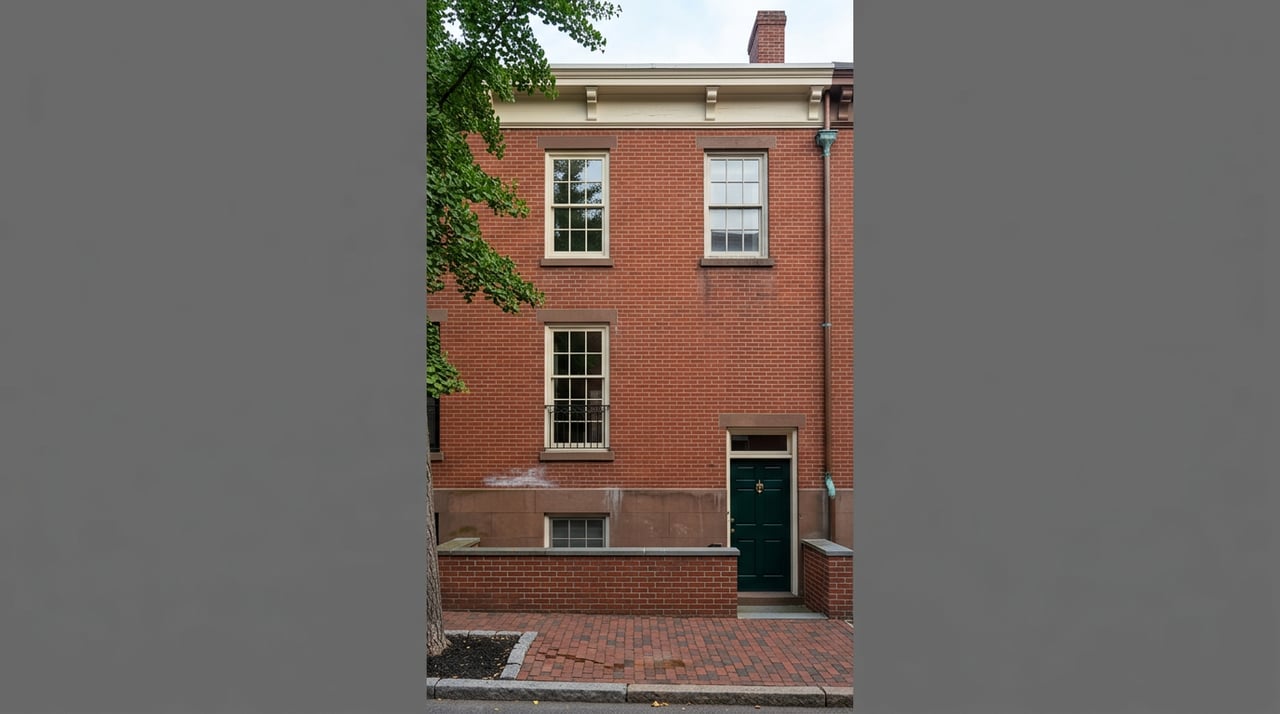
Charlestown Rowhouse Renovation Rules Buyers Should Know
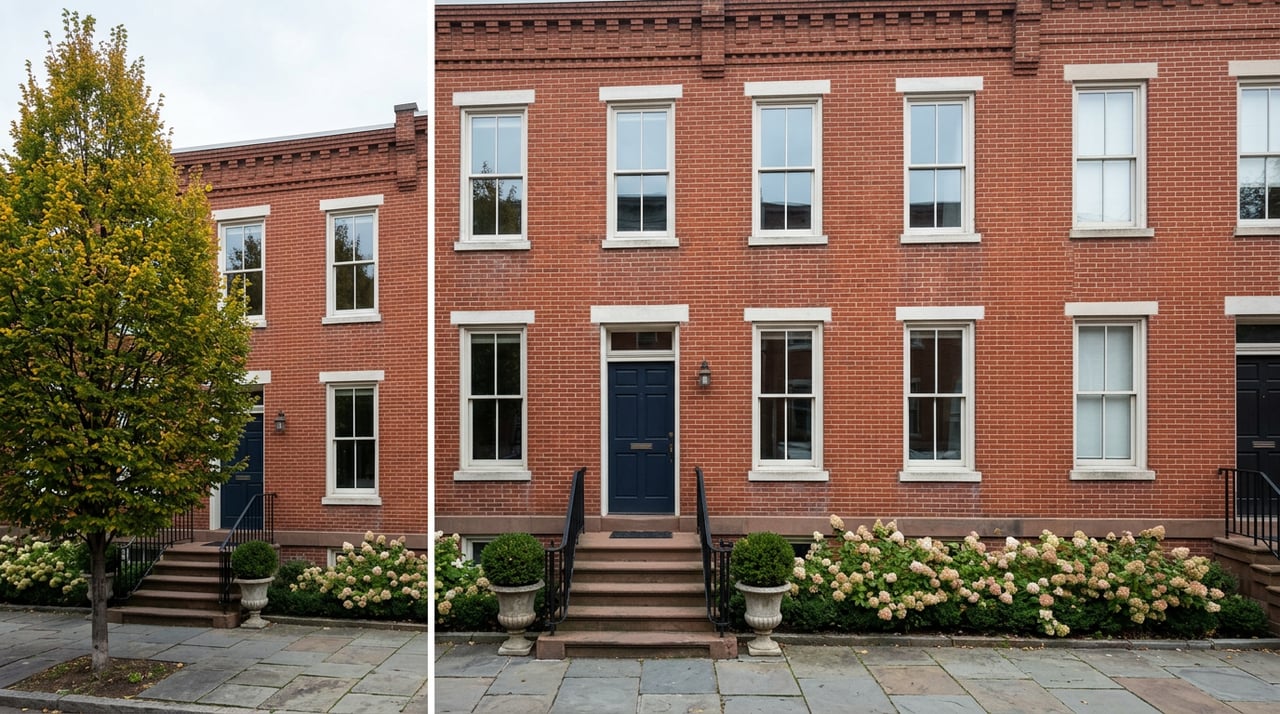
Walk from Beacon Hill across the Charles River into Charlestown and the architecture barely changes. Same red brick laid in running bond. Same black iron railings. Same tall, narrow windows and pitched slate roofs that have watched over these streets for two centuries. A buyer touring both neighborhoods in the same afternoon could be forgiven for assuming the rulebook governing what you can do to these houses is identical too.
It isn't. And that gap, quietly, is one of the more useful things a Charlestown buyer can know before making an offer on a rowhouse they plan to update.
Beacon Hill sits inside a binding local historic district, which means a homeowner cannot swap a window, repaint a shutter, or add a roof deck without approval from a Historic District Commission first. The Beacon Hill Architectural Commission's own guidelines run for pages on window muntin depth, approved sash colors, and shutter hardware, and a permit will not be issued until the commission signs off.
Charlestown is different. Despite the matching brick and the matching streetscape, most of the neighborhood sits inside a Neighborhood Design Overlay District, a zoning tool that offers guidance on rooflines and window patterns but stops well short of a binding review. Two volunteer groups, the Charlestown Preservation Society and the Charlestown Neighborhood Council, weigh in on renovation and development proposals and can push developers toward more sympathetic designs. Neither one can stop a project. Their own materials describe the role plainly: input, not authority.
That difference has real consequences for anyone comparing a Charlestown purchase to a Beacon Hill or South End one. A homeowner replacing windows on Monument Avenue today is not filing an application with a commission and waiting on a hearing date. They are working through city zoning and building permit review, with advocacy groups able to comment but not to deny.
The distinction is easy to state and easy to underestimate, so it helps to see it side by side.
| Neighborhood | Review body | Binding on exterior changes | What gets scrutinized |
|---|---|---|---|
| Beacon Hill | Beacon Hill Architectural Commission | Yes | Window muntins, sash color, shutter hardware, storm window profile |
| Charlestown (most of the neighborhood, today) | Advisory input from CPS and CNC | No | Rooflines and window patterns are guided, not enforced; demolition of a historic structure can proceed after a 90-day delay |
The last row is the one that surprises people. In Charlestown, a historic structure can be torn down after a 90 day waiting period, a fact the Charlestown Preservation Society flags in its own advocacy for stronger protection. That's not a criticism of the neighborhood. For a buyer who wants to add a dormer, swap tired vinyl replacement windows for something better, or reconfigure a rear addition, it has generally meant fewer hearings, shorter timelines, and lower consulting costs than an equivalent project on Chestnut Street or Union Park.
That advisory only status is not permanent everywhere in Charlestown, and the exception matters more than most buyers realize.
In 2022, a group of Monument Square residents petitioned the Boston Landmarks Commission to study the area around Monument Square, the historic core surrounding the Bunker Hill Monument, for designation as Charlestown's first local Landmark District. The commission accepted the petition, and a Study Committee made up of Charlestown residents and Landmarks Commissioners has been meeting regularly since its first session in April 2025.
Here's where things stand as of this writing:
Buildings inside the Monument Square National Register listing are already protected from federally funded projects,
A rowhouse two blocks apart might soon answer to two very different sets of rules for the same paint color decision, depending entirely on where the still-unfinished boundary line gets drawn.
None of this would carry much urgency if Charlestown inventory allowed buyers to wait and see. It doesn't.
Single-family homes in Charlestown averaged $1.97 million across 11 closed sales year-to-date in 2026, up from $1.77 million over the same stretch a year earlier, moving at 101.7% of list price in an average of 19 days to offer. Condos told a similar story at a lower price point, averaging $1.04 million across 62 closed sales, at 101.3% of list and 20 days to offer. Both segments sit at 3.8 and 2.4 months of supply respectively, comfortably inside seller's market territory. Separate luxury market tracking put Charlestown price appreciation at roughly 25% year over year through early 2026, among the strongest of any Boston neighborhood.
That combination of limited single-family supply and buyer demand strong enough to push prices up 25% means a rowhouse coming to market inside or near the proposed Monument Square boundary will not sit long enough for a buyer to wait for the district's final shape. Offers get written on 19-day timelines. The Landmarks Commission process, by contrast, is measured in months and years. A buyer who wants a rowhouse specifically because of the renovation latitude Charlestown has historically offered needs to know today, not after closing, whether their target address sits inside a pending boundary that could change that calculus within the next year or two.
If a Charlestown rowhouse is on your list and a renovation is part of the plan, a few questions are worth answering before you get to inspection:
Ask whether the specific address falls inside the petitioned Monument Square boundary or the wider area the Study Committee is still debating. The boundary materials are public and posted as the committee works through them.
Ask your contractor to price the project two ways: under the current advisory-only review, and under a binding Certificate of Appropriateness process, in case the property ends up inside the final district. The cost difference is not just money. It's calendar time.
Don't assume brick and iron railings mean either strict oversight or a free hand. In Charlestown specifically, they've meant neither, and that middle ground is what's now being reconsidered one neighborhood meeting at a time.
If you're weighing a rowhouse here against a comparable property in Beacon Hill or the South End, that comparison should include the regulatory regime, not just the price per square foot. Our Charlestown neighborhood guide and current Charlestown listings are a good place to start narrowing in on specific blocks, and if you're still deciding whether an urban rowhouse fits your household at all, we've written more on that question for suburban families considering the move.
Does Charlestown have a historic district today? Most of the neighborhood does not. It sits inside a Neighborhood Design Overlay District, which offers zoning guidance but no binding commission review of exterior changes. Monument Square is the one area actively being studied for a true, binding Landmark District.
Charlestown's brick and iron railings will still be there in five years. What governs them might not look the same, and knowing which side of that line your future home sits on is worth a conversation before you write an offer, not after.
Ready to look at Charlestown rowhouses with someone who tracks this kind of detail block by block? The McLaren Team can walk you through current listings, renovation considerations, and how the Monument Square process might affect a specific address. Start Your Move today.
This article is general information, not legal, tax or financial advice. Consult a qualified professional about your situation.
Whether you are interested in selling your home or buying a new dream home, we make it our mission to be by your side every step of the way and long after the closing. Simply put, our goals are your goals. Contact The McLaren Team today to discuss all your real estate needs!
GET IN TOUCH WITH OUR TEAM TO LEARN MORE

THE MCLAREN TEAM
48 MOUNT VERNON ST STE 205 WINCHESTER MA 01890 126 NEWBURY STREET BOSTON MA 02116